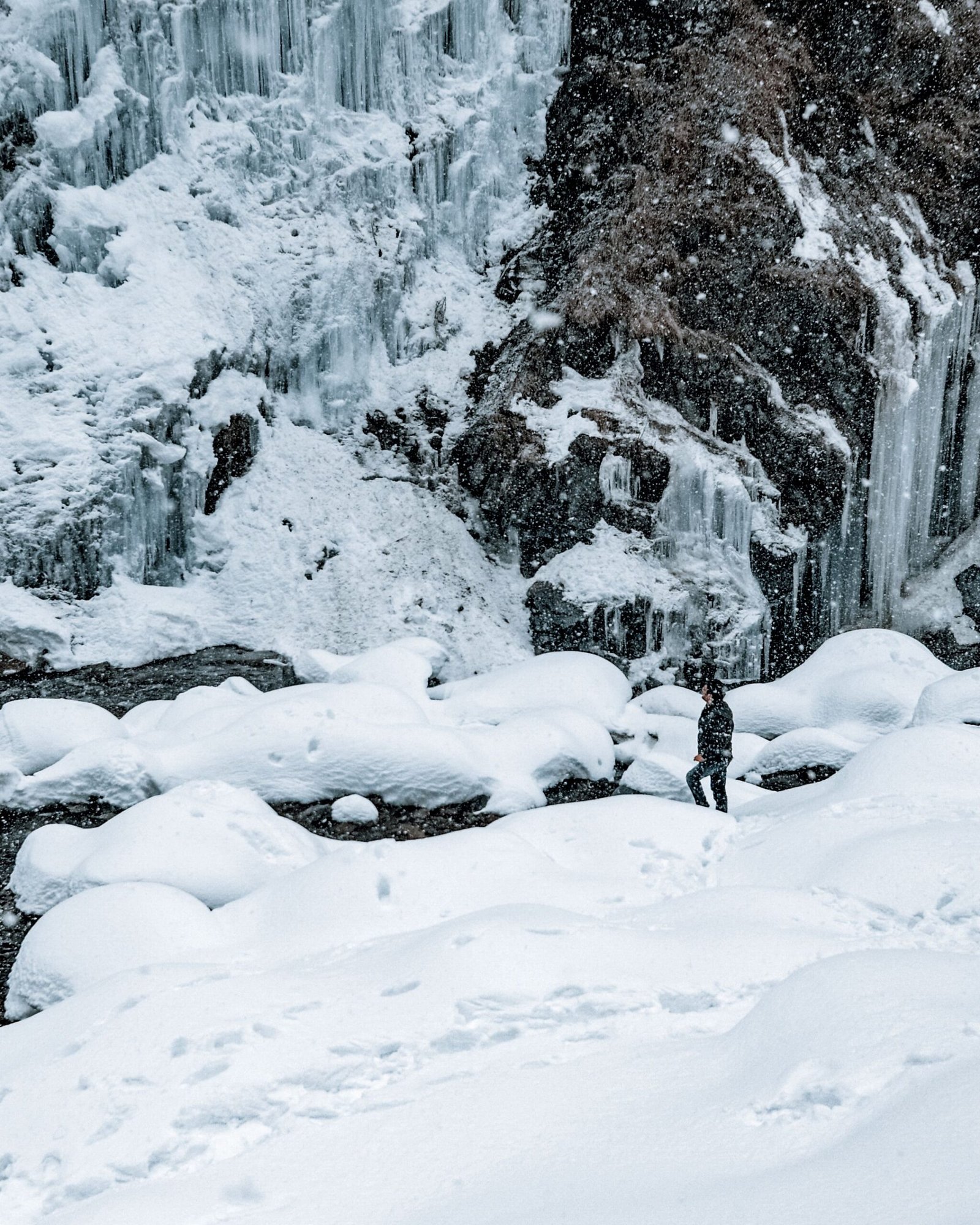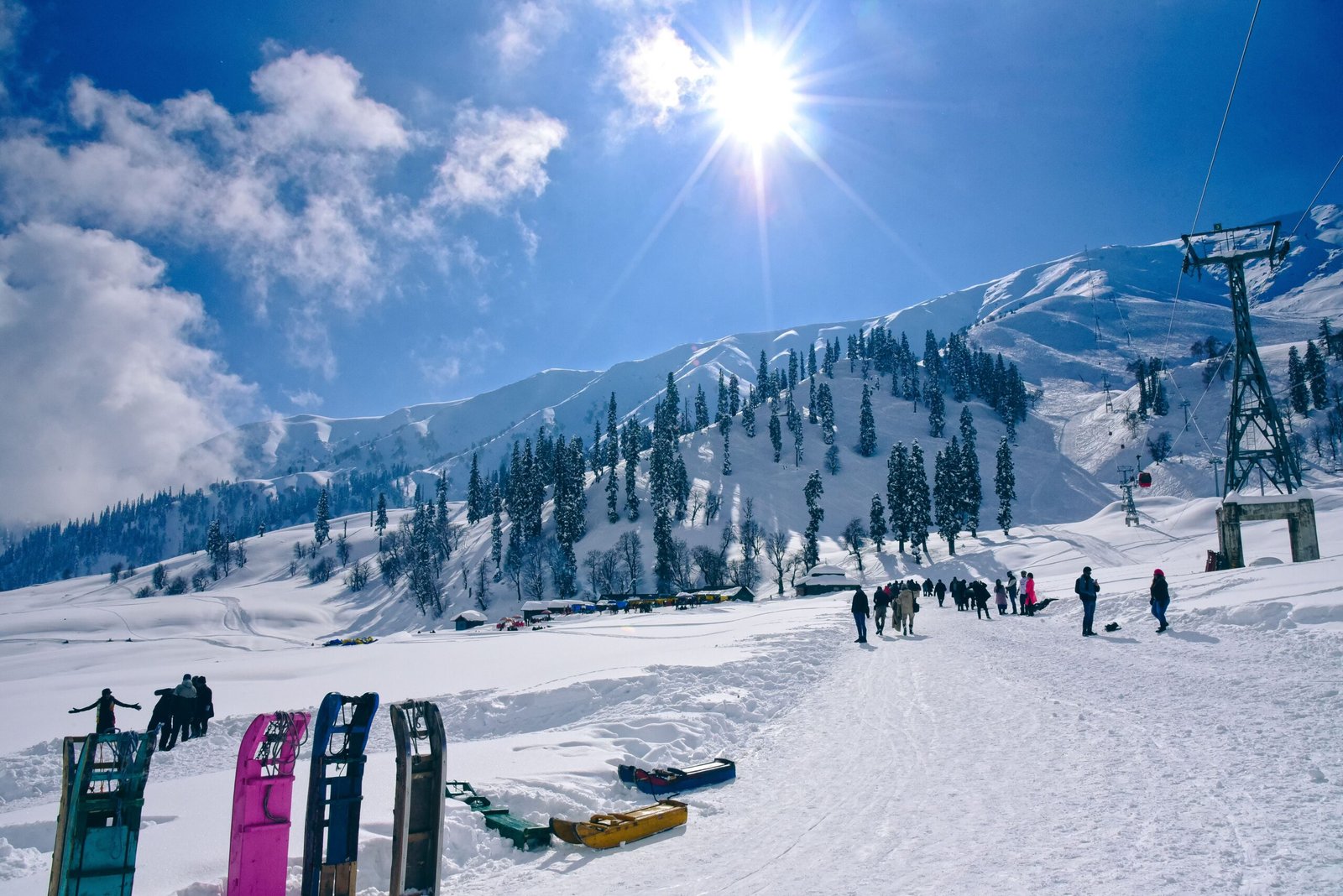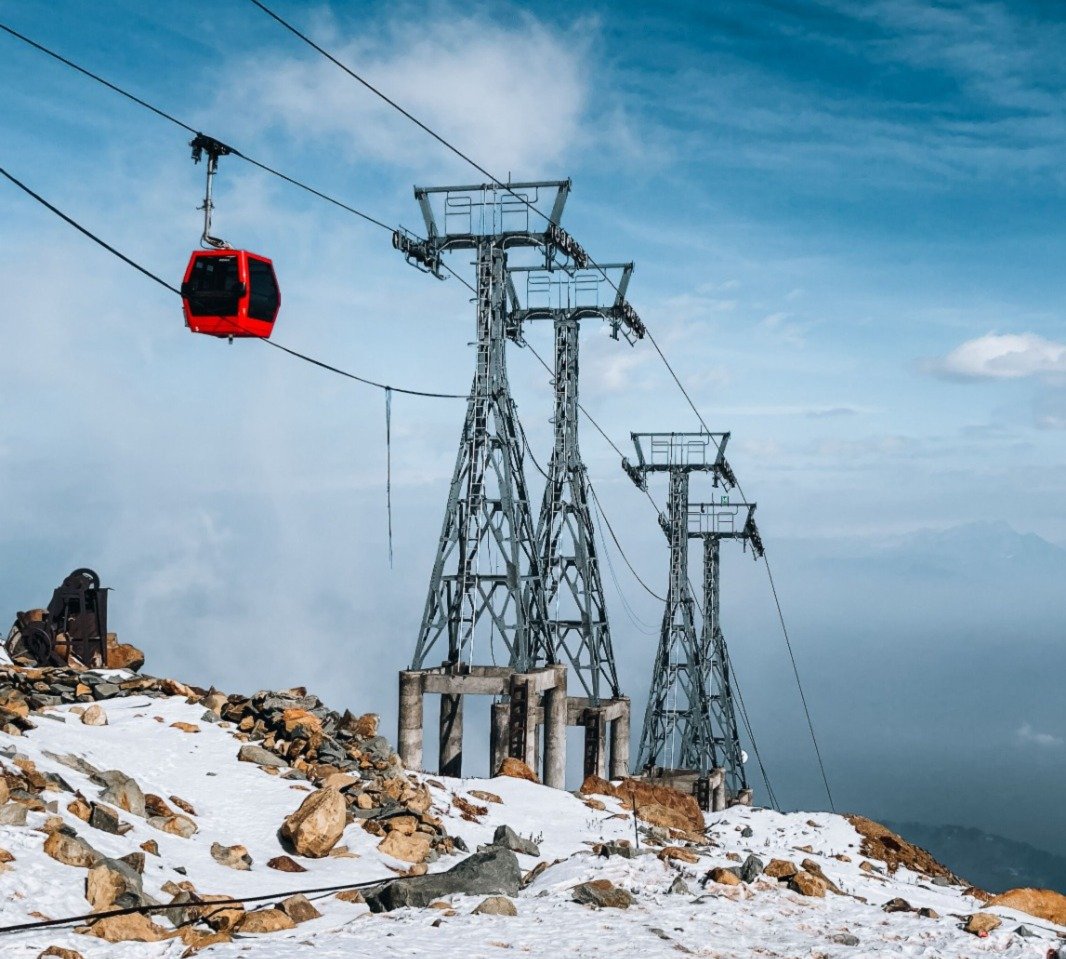
If you are trying to understand the Gulmarg ski area map slopes, here is the simplest truth. Gulmarg is not a marked ski resort with fixed runs like Europe. It is a lift-based mountain where skiing happens in natural zones, bowls, and ridge lines. Once you understand its structure, the whole mountain becomes easy to read.
Most people feel confused on the first day. You look at snow everywhere, but no clear piste map. That is normal. So instead of forcing a “fake map,” let’s build a real one in your mind using zones, lifts, and ski flow paths. If you are planning your full trip, it also helps to understand the overall experience of skiing in Gulmarg before going deeper into terrain.

Gulmarg Ski Area Map Slopes: Core Mountain Structure
The gulmarg ski area map slopes are built around the Gulmarg Gondola system. This lift decides everything. Skiing starts low and moves up in two main stages. If you are booking tickets or planning access, check the full details of Gulmarg gondola booking and entry process.
Key elevation points
Gulmarg Base: ~2,650 m
Kongdori (Phase 1): ~3,050 m
Apharwat Peak (Phase 2): ~4,200 m
Total ski vertical: ~1,300 to 1,500 m
Now think of the mountain like three layers:
Lower layer = learning snow and easy runs
Middle layer = mixed skiing and practice terrain
Upper layer = deep powder backcountry zones
There are no marked pistes. Instead, you follow natural terrain lines based on snow and safety.
Gulmarg Ski Zones (This Is Your Real “Map”)
To understand the gulmarg ski trail layout, you must break the mountain into clear ski zones. These zones work like a living ski map.
1. Gulmarg Base Zone (2,650 m)
This is where your ski day begins.
- Ski rentals and shops
- Beginners practice area
- Gentle snow slopes
- Gondola boarding point
If you need gear, you can plan ahead using ski rental in Gulmarg so you are not rushing on arrival. This zone is simple and safe. Most people warm up here before going up.
2. Kongdori Zone / Phase 1 (3,050 m)
This is the first real ski area.
- Wide open beginner slopes
- Ski school training area
- Soft rolling terrain
- Controlled skiing space
This is where most learners stay for 1–2 days. It is the safest part of the mountain. If you are still new to skiing, it also helps to understand how to learn skiing in Gulmarg or check structured training at a ski school in Gulmarg.
3. Transition Ridge Zone (Between Phase 1 and 2)
This is where skiing starts to change.
- Wind-exposed slopes
- Snow conditions change fast
- Entry point to advanced terrain
- Guide strongly recommended
This zone connects beginner skiing to full mountain skiing. Many skiers also decide here whether they are ready for Gulmarg Phase 2 skiing or not.
4. Apharwat Peak Zone / Phase 2 (4,200 m)
This is the main highlight of the gulmarg ski area map slopes.
- Deep powder bowls
- Open backcountry terrain
- Avalanche-prone slopes
- Advanced freeride skiing
At this height, snow becomes very soft and deep. But it also becomes unpredictable. You should also understand altitude impact through Gulmarg altitude guide before planning long runs.
Gulmarg Ski Flow Map (How You Actually Ski Here)
Instead of fixed routes, skiing follows natural flow paths.
This is the real gulmarg skiing route map in simple form:
Gondola → Kongdori warm-up slopes
Kongdori → ridge access points
Ridge → Apharwat powder bowls
Bowl → valley exit routes
There are no marked green or blue runs. You follow snow, visibility, and guide decisions.
Main Ski Terrain Features You Should Know
To understand the full gulmarg ski trail layout, here are the key terrain types:
1. Open Powder Bowls
Found mostly in Phase 2.
Deep snow
Wide open slopes
Best for advanced skiers
2. Ridge Lines
Between Phase 1 and Phase 2.
Wind affected snow
Narrow entry points
Requires experience
3. Valley Runs
Lower exits toward Gulmarg town.
Longer descents
Softer snow
Change with snowfall
Named Ski Zones (Local Reference Map)
Gulmarg does not have official piste names, but skiers use local terms.
These help build a mental ski map:
- Apharwat North Bowl → deep powder zone
- Mary’s Shoulder → ridge drop area (weather dependent)
- Kongdori Slopes → beginner and intermediate zone
- Drung side valley → long descent runs
These are not fixed runs. They are reference points based on snow and guide experience.
Gulmarg Ski Area Stats (Important Facts)
To understand the mountain properly, here are key facts behind the gulmarg ski area map slopes:
- Total skiable terrain: ~25 km (approx)
- Gondola system: 2 stages (Phase 1 and Phase 2)
- Vertical drop: up to ~1,500 m
- Ski zones: beginner to expert backcountry
- Snow season: December to March
For a bigger picture, you can also compare Gulmarg with other destinations like Gulmarg vs Auli skiing or see where it ranks in best places to ski in India 2026.
Why Gulmarg Has No Fixed Ski Map
This is important to understand clearly that the gulmarg ski area map slopes change every few days because:
- Fresh snowfall covers old tracks
- Wind shifts snow across bowls
- Sun melts and reshapes surfaces
- Avalanche zones move slightly each cycle
So instead of a printed piste map, Gulmarg works like a “live map mountain.” That is why guides are not optional here. Weather and snow can also affect whether skiing even continues, as explained in Gulmarg skiing season updates and rare shutdowns like season called off conditions.
Best Time to Understand the Ski Layout
The ski map changes slightly every month.
- December: early snow, learning phase
- January: deep powder, full terrain opens
- February: most stable ski conditions
- March: heavier snow, softer terrain
Seasonal guide: Best time for skiing in Gulmarg
Month guides:
Simple Safety Map Rules
Before you follow any gulmarg ski area map slopes, keep these simple rules in mind:
- Never ski unknown terrain alone
- Always follow guide advice in Phase 2
- Avoid fresh avalanche zones after snowfall
- Stay in visible terrain during low light
- Do not enter ridge drops without experience
You can also explore beginner guidance at for beginners in Gulmarg if you are still new to skiing.

Conclusion
The gulmarg ski area map slopes are not something you fully read on paper. They are something you learn by seeing, feeling, and slowly understanding how snow behaves on each zone. And maybe that is the real nature of Gulmarg. It does not give you a fixed map. It teaches you how to read a moving one.
So when you stand at the Gondola top, ask yourself one thing: are you looking for a map, or are you ready to understand the mountain itself?